

How Often to Change Wiper Blades: UK Driver's Guide
Table of Contents
- How Often Should You Change Wiper Blades?
- Signs of Worn Wiper Blades You Should Not Ignore
- How to Fit New Wiper Blades Yourself
- Wiper Blade Maintenance Tips to Extend Their Life
- Do Wiper Blades Fail an MOT Test?
- Choosing the Right Replacement Blades for Your Car
- Frequently Asked Questions
Last Updated: September 23, 2026
How Often Should You Change Wiper Blades?
The short answer: most drivers should change wiper blades every six to twelve months (How to check and replace your wiper blades - Expert Advice). If you want the single most useful rule, treat your wipers as a twice-yearly consumable, once in spring and once in autumn, and you will rarely be caught out by a smeared windscreen in heavy rain.
Wiper blades are a wear item, not a permanent fixture. The rubber edge that clears your screen is constantly exposed to UV light, grit, road salt and temperature swings, and it degrades whether you drive every day or leave the car parked for weeks. That is why "how often change wiper blades" comes down to time and exposure rather than mileage, and why a car that sits outside on a driveway can need new blades sooner than one kept in a garage.
This guide from Vipa Car Parts covers the six-month rule, the warning signs that mean you should not wait, how to fit replacements yourself, and how wipers factor into your MOT. We only sell wiper blades, so this is the one job we think about all day.
The Six-Month Rule and Why It Exists
The six-month rule exists because the rubber on a wiper blade starts to harden and lose its flexibility long before it visibly falls apart. A blade that looks fine on a dry day can chatter and smear the moment it meets proper rain.
The GOV.UK MOT inspection manual sets out what testers check on your windscreen wipers, and the standard is simply that they must clear the screen effectively. That is a low bar to fail, but plenty of cars do fail it, usually because the driver never noticed the gradual decline.
Think of it this way: a blade does not go from perfect to useless overnight. It fades. The decline is slow enough that you adapt to it without realising, until one morning you cannot see the road properly.
Factors That Shorten Wiper Blade Life
Several everyday factors shorten wiper blade life, and knowing them helps you predict when yours will need replacing.
- Sunlight and UV exposure. Blades parked facing the sun dry out and crack faster.
- Road salt and grit. Winter gritting leaves residue that acts like sandpaper on the rubber edge.
- Ice and frost. Dragging a frozen blade across a frosted screen tears the edge.
- Running the wipers on a dry screen. This grinds grit into the rubber and wears it down quickly.
- Coastal or dusty environments. Salt air and fine dust both accelerate wear.
A common mistake is scraping frost off with the wipers themselves. That single habit can take months off a blade's life.
Signs of Worn Wiper Blades You Should Not Ignore
The clearest signs of worn wiper blades are streaking, squeaking and smearing, and any one of them means it is time to replace them. These symptoms rarely appear on their own, so watch for a combination.
Streaking, Squeaking and Smearing
Streaking is the classic first symptom: the blade leaves thin lines of water behind because the rubber edge no longer sits flat against the glass. Squeaking is friction, often caused by a hardened or contaminated edge. Smearing is the worst of the three, a greasy film that makes oncoming headlights glare badly at night.
Other signs worth acting on:
- The blade leaves a patch of water it simply skips over.
- The rubber edge looks cracked, split or has chunks missing.
- The metal frame has bent or lost tension.
- The wipers judder across the screen rather than gliding.
You can test a blade quickly. Run a finger along the rubber edge and feel for nicks or rough spots. If it feels jagged rather than smooth, replace it.
How to Fit New Wiper Blades Yourself
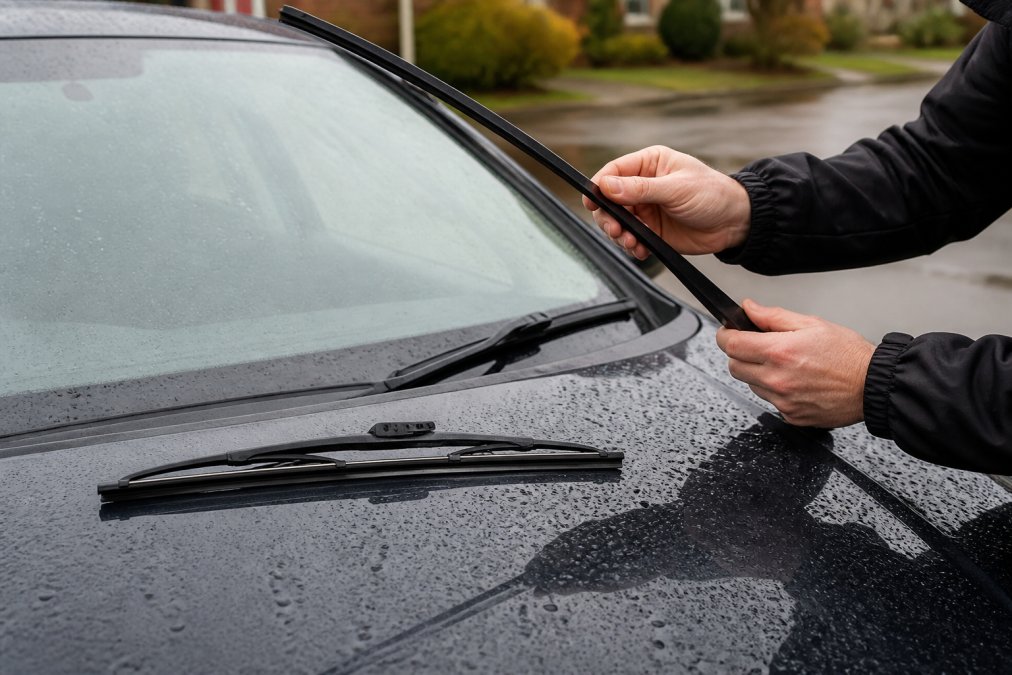
Fitting new wiper blades yourself takes around ten minutes and needs no special tools. It is one of the easiest jobs on any car, and doing it yourself saves you the labour charge of a garage visit.
Tools You Will Need
You need very little to fit wiper blades, and most of it is already in the car:
- A new pair of blades sized for your car
- A soft cloth to protect the glass
- A flat-bladed screwdriver, for certain connector types only
- Your car's handbook, if you want to confirm the blade length
Step-by-Step Fitting Process
- Park on level ground and switch off the engine. Let the wipers return to their resting position.
- Lift the wiper arm away from the screen until it stands upright.
- Lay a folded cloth on the glass under the arm, so a dropped arm does not crack the screen.
- Press the release tab on the old blade's connector and slide it off the arm.
- Line up the new blade's connector with the arm and click it into place. You should hear it lock.
- Lower the arm gently back onto the screen.
- Repeat on the other side, then run the wipers to check for a clean sweep.
If your car uses a hook-type arm, the blade simply unhooks. If it uses a pinch-tab or push-button connector, the release tab is usually on top of the blade. Check your handbook if it is not obvious.
Wiper Blade Maintenance Tips to Extend Their Life
Good wiper blade maintenance tips can add months to a set of blades. None of them take long, and together they make a real difference to how well your wipers perform.
- Wipe the blade edge with a damp cloth every few weeks to remove grit.
- Clean the windscreen properly, inside and out, so the blade is not dragging over grime.
- Lift the wipers off the screen before scraping frost, and never use them to clear ice.
- Top up your screen wash with a proper additive rather than plain water.
- Park in the shade or use a windscreen cover if your car sits outside all day.
Screen wash matters more than people think. Plain water freezes in winter and does nothing to shift the film of oil and grime that builds up on a windscreen. A proper additive keeps the screen clean, which in turn puts less strain on the blade edge.
Do Wiper Blades Fail an MOT Test?
Wiper blades can fail an MOT test, and they do. The test checks that your wipers clear the windscreen effectively and that the blades are in good condition, so a blade that smears or leaves large unwiped areas is a legitimate fail.
The DVSA guidance for MOT testers is clear that wipers form part of the roadworthiness check, and a worn blade is a defect, not a minor inconvenience. If your MOT is due and your wipers are streaking, replace them before the test rather than paying for a retest.
It is worth checking your screen wash level too. A car with an empty washer bottle can also pick up an advisory, and it is a five-second check.
Choosing the Right Replacement Blades for Your Car
The right replacement blades are the ones that fit your exact car, and getting that wrong is the most common frustration drivers report. Wiper blade lengths and connector types vary by make, model and even by model year, so a set that fits one car will not fit another.
The reliable way to get the correct blades is to search by your vehicle registration. That removes the guesswork around model numbers and trim levels, which is where most people go wrong.
At Vipa Car Parts, we only sell wiper blades, and we have built our whole service around getting the fit right the first time.
Frequently Asked Questions
How do I know if my wiper blades need replacing?
Watch for streaking, juddering, squeaking, or missed patches on the windscreen even after a heavy downpour. Rubber that looks cracked, hardened, or frayed is past its best. If you run a fingernail along the edge and it feels rough rather than smooth, replacement is due. Most drivers should change wiper blades every six to twelve months, or sooner if you park outside under trees or drive frequently on motorways.
Do wiper blades fail an MOT test?
Yes. During an MOT, the tester checks that wipers clear the windscreen effectively and that the washer system works. Blades that smear, streak, or leave large unwiped areas can lead to an advisory or a fail. Replacing worn blades before your test is a simple, low-cost step that removes one avoidable reason for a retest. Check your blades a few weeks before your MOT is due.
Can I replace wiper blades myself?
Absolutely. Most cars use a hook, pin, or push-button connector that releases in seconds. Lift the arm away from the windscreen, press the release tab, slide the old blade off, and click the new one into place. Lay a towel on the glass in case the arm snaps back. Vipa Car Parts supplies fitting guides with every order and a registration lookup to confirm the exact blade for your vehicle.
How can I make my wiper blades last longer?
Clean the rubber edge monthly with a damp cloth and a little screen wash to remove grit and tree sap. Use the washers before every wipe in dry, dusty conditions so the blade glides rather than drags. Never use wipers to clear frost or ice; use a scraper and de-icer first. Park in the shade where possible, since UV exposure hardens rubber. These habits can stretch blade life well beyond the standard six-month mark.