

How Do You Remove Stuck Wiper Blades Safely?
Last Updated: November 16, 2026
Quick Summary
To remove stuck wiper blades safely, switch off a cooled engine, park on level ground and lay a cloth on the glass under the arm. Lift the arm until it locks, release the tab, pin or clip, then slide and wiggle the blade free along the arm. Keep a firm grip on the spring-loaded arm throughout.
- Identify whether the blade is stuck to the arm or the arm is seized on its shaft before starting.
- A hook arm usually has no release tab, so squeeze the blade and slide it along the hook.
- Leave penetrating oil on a seized arm for at least an hour, or overnight for old corrosion.
- Rock a seized arm side to side on the shaft rather than levering it.
- Stop and fit new blades if the rubber is split, the blade smears or the connector is cracked.
Table of Contents
- Before You Start: Safety Precautions and Preparation
- Identify Your Stuck Wiper Blade Connector First
- Wiper Blade Removal Tools You Actually Need
- How to Remove Stuck Wiper Blades: Step by Step
- How to Remove a Seized Wiper Arm from Its Shaft
- How to Protect a Windscreen When Changing Wipers
- When to Stop and Fit New Blades Instead
- Frequently Asked Questions
Before You Start: Safety Precautions and Preparation
A stuck wiper blade is not a five-minute job, and the difference between a clean removal and a cracked windscreen comes down to preparation.
Before you touch anything, run through these checks:
- Switch the engine off and let it cool. A hot bonnet is a burn risk.
- Park on a level surface so the arm does not swing back on its own.
- Never lift the wiper arm with the ignition on or the wipers mid-sweep.
- Lay a thick cloth or towel on the windscreen under the arm.
That last point matters most. The wiper arm is spring-loaded, and if your hand slips, the bare metal arm snaps down onto the glass.
If you are working in freezing weather, read our guide on how to stop wiper blades freezing to your windscreen before you start, because a blade frozen to the glass will fight you the whole way.
Identify Your Stuck Wiper Blade Connector First
The correct removal method depends entirely on the connector type, so identify it before you reach for any tool.
- Stuck blade: the blade will not release from the connector, but the arm still lifts and pivots normally on its shaft.
- Seized arm: the blade may come off the arm easily, but the arm will not lift off the splined shaft at the base. That is corrosion, not a connector problem, and no amount of tab-pressing will free it.
If the arm pivots freely, work on the connector. If the arm is rigid at its base, skip to the seized-arm sequence below.
Now identify the fitting. Look at the joint closely and match it to one of these:
- Hook arm: the arm ends in a J-shape that hooks through a channel in the blade. There is usually no release tab, you squeeze the blade slightly and slide it along the hook to free it. Common on many older and mid-age vehicles.
- Pin arm: a small pin pushes through a hole in the blade, held by a spring clip or tab. Press the tab and pull the blade straight off the pin. Forcing it sideways bends the pin.
- Bayonet or clip arm: a retaining clip locks the blade to a flat tongue on the arm. Lift or squeeze the clip, then slide the blade free along the arm's line.
- Push-fit or pinch-tab: some blades simply pull away once a pinch tab is squeezed. If you cannot see a tab, pin or latch, do not assume it pulls off, check for a hidden clip under the joint first.
A practical recognition test: with the arm raised and supported, try a gentle push along the arm's axis.
Watch out: levering a hook-arm blade with a screwdriver as if it were a clip arm is a common way to crack the plastic housing. If your car is older and you are unsure which blade fits, our step-by-step guide to finding wiper blades for older cars walks through matching the fitting to your model.
Wiper Blade Removal Tools You Actually Need
You need very little: a small flathead screwdriver, a cloth, and penetrating oil for stubborn cases. A plastic trim tool is a safer alternative to metal if you have one.
Here is what each tool is for, and its limits:
- Small flathead screwdriver: eases a stiff release tab. Keep it small; a large blade chews plastic.
- Penetrating oil: loosens corrosion around a seized arm. Spray, wait, then retry.
- Locking pliers: only for a seized arm, never for the blade itself.
- A wiper puller: a dedicated tool for pulling a corroded arm off its shaft.
A word of warning on tools. Controlled force wins; brute force breaks things. That screwdriver is for gently lifting a tab, not for levering the blade off the arm. If you find yourself pushing hard, stop and check the connector again.
How to Remove Stuck Wiper Blades: Step by Step
The safe sequence is lift, release, then wiggle free, in that order, with the arm always under control. Follow these steps and most blades come off in under ten minutes.
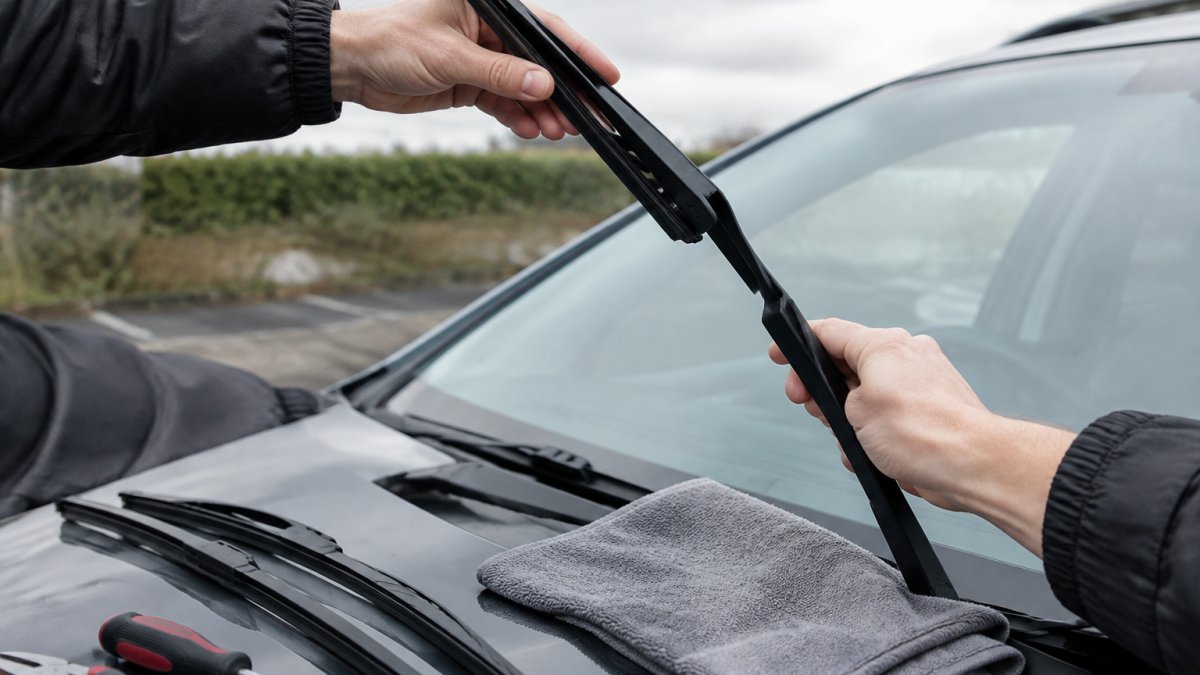
Step 1: Lift the Wiper Arm Away from the Windscreen
Grip the arm near the blade and lift it until it stands upright and locks. Do not let go. If the arm will not stay up, hold it with one hand while you work with the other.
Step 2: Release the Tab, Pin or Retaining Clip
Press down on the release tab, or lift the retaining clip, depending on your connector. If it will not budge, a small screwdriver can gently ease it. You should feel or hear a click as it unlocks.
Step 3: Slide, Wiggle and Pull the Blade Free
With the tab released, push and pull the blade gently along the arm while pulling away. A little wiggle breaks the grip of corrosion.
Watch out: pulling the blade straight down instead of along the arm is the classic way to snap a plastic connector.
The safe sequence is lift, release, then wiggle free, in that order, with the arm always under control.
| Step | What to do | Watch out for |
|---|---|---|
| 1 | Lift the wiper arm until it stands upright and locks | Do not let go of the spring-loaded arm |
| 2 | Press the release tab or lift the retaining clip | A small screwdriver can gently ease a stiff tab |
| 3 | Slide, wiggle and pull the blade free along the arm | Pulling straight down snaps a plastic connector |
How to Remove a Seized Wiper Arm from Its Shaft
A seized wiper arm is a different problem from a stuck blade, and it needs a different approach.
Here is the distinction that most guides miss. A stuck blade is a connector problem. A seized arm is corrosion between the arm and the wiper arm shaft.
Work through this graduated sequence, and treat each step as a stop point if it does not work:
- Mark the rest position. Before you move anything, note or photograph where the arm sits on the glass so you can refit it at the same angle. An arm refitted one spline out will sit wrong and sweep poorly.
- Apply penetrating oil. Spray around the base of the arm where it meets the shaft and leave it to work, most practitioners leave it at least an hour, and overnight if the corrosion is old. Wipe excess away from paintwork.
- Rock, do not lever. With the arm raised and supported, rock it gently side to side on the shaft, not up and down. The aim is to break the corrosion bond gradually, not to bend the arm.
- Use a wiper puller. A dedicated puller draws the arm off the shaft evenly and is the correct tool once oil and rocking have failed. Fit it so it pulls along the shaft's axis, not against the glass.
- Locking pliers, with limits. Pliers may help you grip a stubborn arm, but they must never be used to twist the arm off the splines or to lever against the glass or paintwork. Pad the jaws with cloth to avoid chewing the arm's finish.
- Stop before force. If the arm still will not shift after oil, rocking and a puller, stop. Forcing it can damage the shaft, the linkage or the wiper motor, turning a cheap job into an expensive one.
Watch out: never pry a seized arm with a screwdriver against the glass or the paintwork.
Know the warning signs that mean professional help rather than more effort:
- Heavy corrosion or a visibly bent arm.
- A damaged or rounded shaft, or splines that look chewed.
- The wiper mechanism moves unexpectedly when you rock the arm.
- The arm will not budge after a proper oil soak and a puller.
In any of those cases, a garage with the right puller and a replacement arm is the cheaper route. If the arm comes free but the blade is worn, our guide on when to replace windscreen wiper blades helps you decide what to fit next.
How to Protect a Windscreen When Changing Wipers
Protecting the glass is simple, and it saves you the cost of a new windscreen. The cloth under the arm is your main defence, but a few habits help.
- Always fold the cloth where the arm could fall.
- Never let the bare arm rest on the glass.
- Keep tools away from the glass surface.
- Lower the arm gently by hand; never let it snap down.
The same care applies to paintwork. Keep the screwdriver and pliers clear of the bonnet edge, and set removed blades on the cloth, not on the paint.
When to Stop and Fit New Blades Instead
If the rubber is split, the blade smears, or the connector is cracked, stop fighting the old blade and fit new ones. A blade that has seized to the arm is usually worn out anyway.
Signs it is time to replace rather than repair:
- The rubber is torn, hard or missing chunks.
- The blade leaves streaks or misses patches.
- The connector is cracked or the tab has snapped.
- The blade judders across the glass.
If you are weighing up whether to keep going, our guide on when to replace windscreen wiper blades helps you decide, and our fair test of whether premium wiper blades are actually better covers whether the extra cost is worth it.
Removing a stuck blade is a job most drivers can do at home with a cloth, a small screwdriver and a bit of patience.
Frequently Asked Questions
Why will my wiper blade not come off?
Most stuck wiper blades are held by a connector that has not been fully released, or by corrosion around the hook or pin. Check the fitting type first, then press or lift the release tab firmly before sliding the blade. If it still will not move, apply a small amount of penetrating oil to the connector and leave it for a few minutes. Never force the arm, as the spring-loaded arm can snap back onto the windscreen glass.
Can you use WD-40 on a stuck wiper blade?
A penetrating oil such as WD-40 can help free a corroded connector or a seized wiper arm shaft, but spray it onto the metal joint only. Keep it away from the rubber blade and the windscreen glass. Wipe any overspray off the glass with a clean cloth before fitting replacements, and give the joint a few minutes to work before you try to move it.
What tools do you need to remove stuck wiper blades safely?
For most cars you need nothing more than your hands and a cloth to protect the glass. A small flathead screwdriver helps release a retaining clip on some connector types, and locking pliers or a wiper puller are useful when a wiper arm is seized on its shaft. Always place a folded cloth or towel under the arm, and use controlled force rather than sudden pulls so the arm does not spring back onto the windscreen.
When should you replace a wiper arm instead of trying to free it?
If the arm is badly corroded at the shaft, the spring has lost tension, or the arm no longer sits flat against the glass, replacement is the safer option. A wiper arm that wobbles or lifts at speed will not clear the screen properly, even with new blades fitted. Once you have the arm free, check that it holds the blade firmly against the glass; if it does not, fit a new arm and a matching set of blades.
